
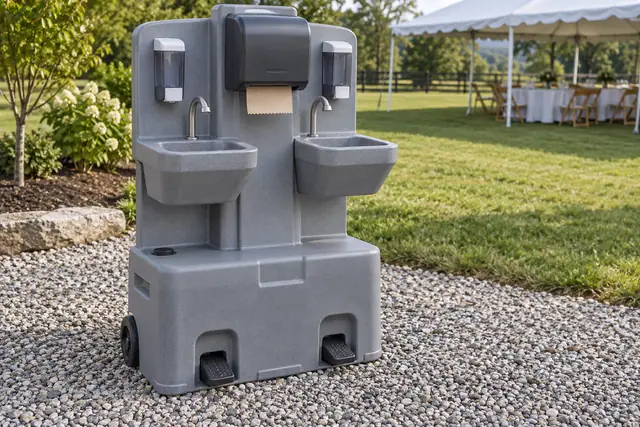
Specify the function you need
Tell the supplier whether the station is for ordinary restroom handwashing, a food-related activity or a work process with additional requirements. A portable handwashing unit should not be assumed suitable for washing utensils, processing food or handling industrial contamination.
Ask about water supply, wastewater storage, soap, towels, activation method and usable height. Confirm any temperature or accessibility requirements rather than assuming they are included because a photograph shows a basin.
Place washing on the natural return route
People leaving a toilet should be able to find the station without doubling back through a queue or walking into a vehicle area. Keep enough usable space around the washing position for the people expected to use it, including anyone using a mobility device.
The ground beneath a station needs attention as well as the unit. Report leaks or poor drainage to the supplier and property contact. Do not solve a wastewater problem by letting water run onto the site or into a nearby drain.
Agree how supplies and wastewater are managed
Clarify who checks supplies, who refills the equipment, and what to do if water, soap or towels run low. The correct replacement products and refill method should come from the supplier. A full-looking tank is not evidence that a station is ready for use.
For longer rentals or busy activities, include servicing in the initial discussion. Keep cleaning chemicals, beverage waste and other liquids out of the equipment unless the supplier has specifically approved that use.
Questions before you book
Is sanitizer the same as a handwashing station?
No. Sanitizer does not supply a basin, soap-and-water washing or wastewater collection. Explain which function your activity requires.
Can the station be connected to any nearby hose?
Do not assume that. Confirm the intended supply arrangement and any connection requirements for the actual equipment.